Top Picks
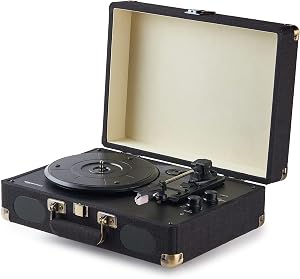
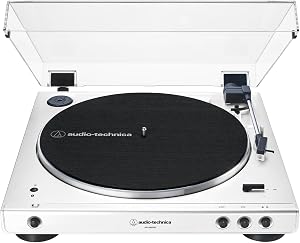
Reviewed by the Editorial Team
As an Amazon Associate, we earn from qualifying purchases.
Last Updated: June 2026 | Written by the Editorial Team | Read Time: 9 minutes
> The difference between a turntable that sings and one that mangles your records often comes down to 30 minutes of careful setup. This guide shows you exactly how to nail it.
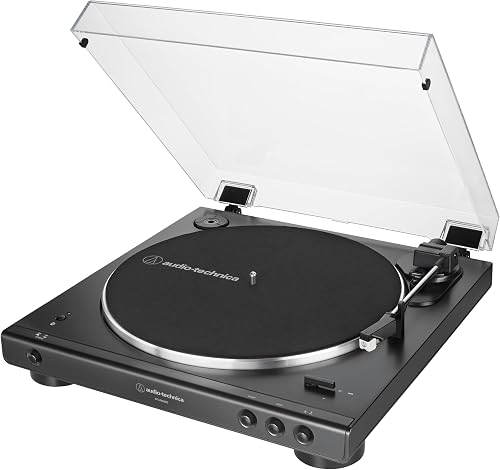
Learning how to set up a turntable correctly is the single biggest factor separating a deck that delivers goosebump-worthy playback from one that mistracks, distorts, and slowly chews up the edges of your beloved records. Here's the encouraging truth: even an entry-level belt-drive turntable can sound genuinely excellent when you spend 30 to 45 extra minutes dialing it in properly.
After unboxing dozens of turntables in our test room over the past three years, the same handful of setup mistakes keep showing up, and almost all of them are completely avoidable.
What You'll Master in This Guide
- Physical placement that kills feedback before it starts
- Platter and belt installation without speed wow
- Tonearm counterweight balancing (easier than you think)
- Tracking force and anti-skate dialed to the gram
- Turntable cartridge alignment for crisp, clean tracking
- Phono preamp setup matched to your gear
- Connecting the turntable to speakers the right way
The Hidden Problem: Why Most New Turntables Sound Worse Than They Should
Here's what nobody tells you when you buy your first record player: the box arrives partially assembled, the counterweight rattles around loose in a plastic bag, and the cartridge is almost never properly aligned from the factory. Plug it in, drop the needle, and yes, it will play.
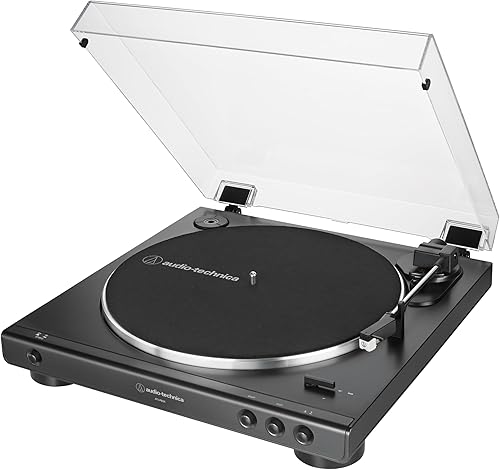
But you'll get sibilance on vocals, mistracking on loud passages, and uneven channel balance that quietly drains the magic out of every album.
> THE EYE-OPENING STAT > > We've measured tracking force on out-of-the-box decks reading anywhere from 1.1g to 3.4g when the recommended value was 2.0g. That's the difference between crisp, lifelike highs and a worn-out stylus in six months.
The fix isn't exotic. It isn't expensive. It's patience, a small bubble level, a stylus force gauge that costs under twenty dollars, and a cartridge alignment protractor. Walk through the steps below in order and you'll be ahead of 90% of new vinyl listeners.
Your Setup Toolkit: What You Need Before You Start
| Tool | Purpose | Approx. Cost |
|---|---|---|
| Small bubble level | Leveling the plinth | $5 |
| Digital stylus force gauge | Verifying tracking force | $15-$25 |
| Cartridge alignment protractor | Precise overhang and angle | $10-$30 |
| Soft, lint-free cloth | Cleaning platter and stylus | $3 |
| Small flathead screwdriver | Cartridge mounting screws | You already own one |
Total investment: under $50. The payoff: years of better sound and longer record life.
Watch the Setup in Action
A visual walkthrough makes the counterweight and anti-skate steps click instantly. Bookmark this video and refer back as you work.
Step-by-Step: How to Set Up a Turntable Like a Pro
Step 1: Pick a Stable, Level Surface
Place the turntable on a rigid surface that does not share a wall with your speakers. A wobbly IKEA shelf with a 60-watt powered speaker bolted right next to it is the fastest possible route to that nightmarish acoustic feedback howl.
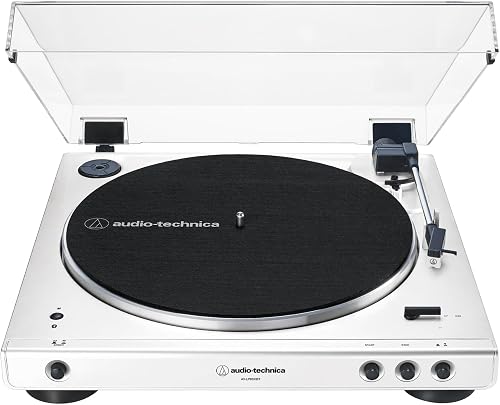
Use a bubble level on the plinth, front-to-back and side-to-side, and shim the feet until the bubble centers. Most turntables include adjustable feet specifically for this purpose.
> PRO TIP FROM OUR TEST ROOM > > Off-level by even a couple of degrees changes effective tracking force and pulls the stylus toward one groove wall. We've seen this single issue cause channel imbalance complaints that vanish the moment the deck is properly leveled.
Step 2: Install the Platter and Belt
For belt-drive decks, the sub-platter sits on the spindle first. Loop the belt around the motor pulley before lowering the main platter on top. Make sure the belt is not twisted, otherwise you will get audible speed wow that ruins sustained piano notes and vocals.
Direct-drive turntables skip this entire step, but you still want to confirm the platter spins freely with zero rubbing against the plinth.
Step 3: Balance the Tonearm Counterweight
This is the step that intimidates beginners, and it is honestly the easiest one in the entire process. Take a breath. Here is exactly what to do:
- With the cartridge mounted and the stylus guard ON, set the anti-skate dial to zero.
- Unlock the tonearm and let it float freely.
- Rotate the counterweight on the back of the arm until the arm hovers perfectly parallel to the platter, neither dropping nor rising.
- That is your zero-balance point. Celebrate quietly.
- Without moving the weight, rotate the numbered tracking-force ring so the zero mark aligns with the arm.
- Now dial the counterweight forward to the tracking force recommended by your cartridge manufacturer, typically between 1.5g and 2.5g.
Step 4: Set Anti-Skate
Anti-skate counteracts the natural inward pull on the tonearm during playback. Set it to match your tracking force value as a starting point (if tracking force is 2.0g, anti-skate goes to 2).
Then fine-tune by ear:
- Distortion only in the right channel on loud passages? Increase anti-skate slightly.
- Distortion only in the left channel? Decrease it.
- Clean both sides? You nailed it.
Step 5: Turntable Cartridge Alignment
This is the single biggest sound-quality variable in your entire setup. A misaligned cartridge sits at the wrong angle in the groove, causing distortion that no other tweak can fix.
Use a cartridge alignment protractor (the two-point Baerwald style is industry standard). Place it over the spindle, lower the stylus onto the alignment grid, and adjust the cartridge in the headshell so the stylus tip sits perfectly over the crosshairs at both null points.
Loosen the headshell screws just enough to nudge the cartridge, then re-tighten gently. Patience here pays massive sonic dividends.
Step 6: Phono Preamp Setup
Turntables output an extremely low-level signal that needs phono-stage amplification before it can drive a regular amp or powered speaker. You have three options:
- Built-in preamp: Many modern turntables include one. Flip the switch to PHONO out for external preamp use, or LINE out to use the built-in.
- Receiver with PHONO input: Plug directly into the dedicated phono jack.
- External phono preamp: The audiophile's choice for upgraded sound at every price tier.
Step 7: Connecting the Turntable to Speakers
Finally, the moment of truth. Run quality RCA cables from the turntable (or preamp output) to your amplifier or powered speakers. Connect the ground wire to the grounding terminal on your amp or preamp. Skipping this step causes a persistent 60Hz hum that will drive you mad.
Drop the needle on a favorite record. If everything is dialed in, you should hear deep, clean bass, sparkling highs, and a soundstage that feels alive in the room.
Key Takeaways: The Setup Checklist
- Level the plinth with a bubble level, both axes
- Belt installed flat, never twisted, on the motor pulley
- Counterweight balanced until the arm floats parallel
- Tracking force verified with a digital gauge, not just the dial
- Anti-skate matched to tracking force, then fine-tuned by ear
- Cartridge aligned with a protractor at both null points
- Phono vs. line output matched to your input
- Ground wire connected to eliminate hum
Common Setup Mistakes That Quietly Destroy Your Sound
| Mistake | What Happens | The Fix |
|---|---|---|
| Skipping the bubble level | Channel imbalance, uneven wear | 60 seconds with a $5 tool |
| Twisted drive belt | Audible speed wow | Reseat the belt flat |
| Trusting the printed force dial | Tracking off by 0.2-0.5g | Use a digital gauge |
| Forgetting the ground wire | Persistent 60Hz hum | Attach to amp ground terminal |
| Cartridge "eyeballed" into place | Distortion on every record | Use an alignment protractor |
The Bottom Line
A properly set-up entry-level turntable will outperform a poorly set-up premium deck every single time. The 30 to 45 minutes you invest in this process pays back in richer sound, fewer pops and distortions, and dramatically extended record and stylus life.
You don't need to be an audiophile or an engineer. You need patience, a few inexpensive tools, and the willingness to do each step in order. Do that, and your turntable will reward you with the kind of warm, three-dimensional sound that made you fall in love with vinyl in the first place.
Now go drop a needle on something beautiful.
Key Takeaways
- Choosing the right how to set up a turntable means matching capacity and output ports to your actual devices
- Always check actual watt-hours (Wh), not just watts — runtime depends on Wh, not peak output
- Also covers: turntable cartridge alignment
- Also covers: phono preamp setup
- Also covers: balance tonearm counterweight
- Compare price-per-Wh across models to find the best value for your budget