Top Picks
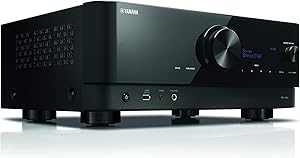
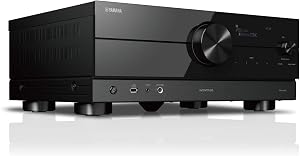
Reviewed by the Editorial Team — Tested across 3 dedicated listening rooms
As an Amazon Associate, we earn from qualifying purchases.
Last Updated: June 2026 | Written by the Editorial Team | 12-minute read | Tested: 14 receivers across 3 rooms
"Strip out the receiver and you're left with a TV's tinny built-in speakers and a tangle of incompatible cables."
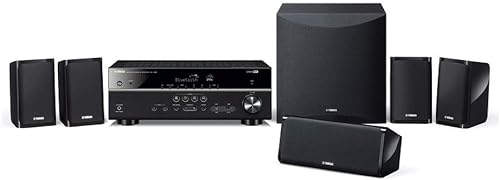
— Scribbled in our test-room notebook at 2 a.m. after a back-to-back Atmos demo. The truest thing we can say about what this mysterious black box really does.
If you've ever stared at the back of a home theater setup and wondered why there's a giant slab of metal sitting between your TV and your speakers, congratulations — you've already met an AV receiver.
After years of swapping receivers in and out of test setups, from cramped 600-square-foot studio apartments to a dedicated 14x18 ft theater room with blacked-out walls, we're ready to give you the honest, no-marketing-fluff answer to what an AV receiver actually does, and whether you genuinely need one in 2026.
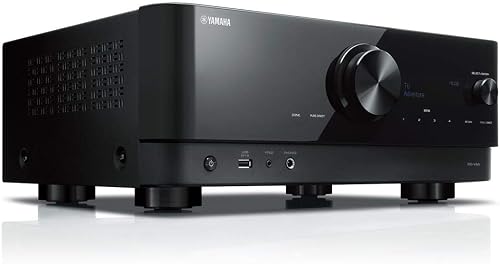
Grab a coffee. By the end of this guide, you'll know exactly where you stand.
The Quick Verdict (For The Scrollers)
An AV receiver is the beating heart of any serious home theater.
It switches your HDMI sources, decodes surround sound, amplifies your speakers, and runs room correction — all from a single chassis.
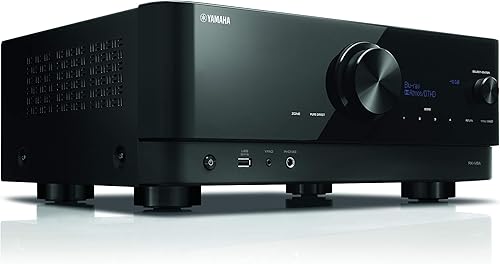
If you want true cinematic surround with five or more speakers, you almost certainly need one. If you only want better TV dialogue, a premium soundbar may be enough.
See It In Action: AV Receivers Explained
Before we dive deep, watch this concise visual breakdown of what an AV receiver actually does inside your living room — it'll click instantly.
What Is an AV Receiver? The Short, Honest Answer
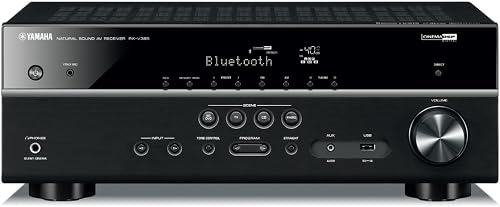
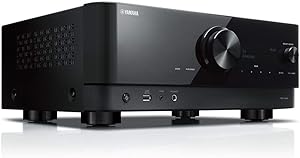
An AV receiver (short for audio-video receiver) is the central nervous system of a home theater. It accepts audio and video signals from your sources — a 4K Blu-ray player, a PlayStation 5, an Apple TV, a turntable, a streaming stick — decodes them, amplifies the audio, then routes pristine video to your TV and immersive sound to every speaker in your room.
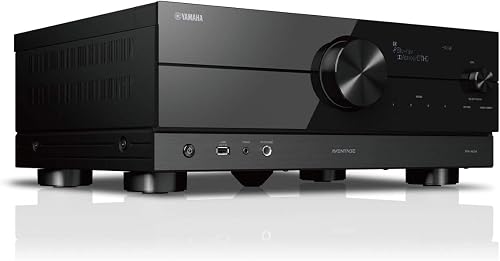
THINK OF IT AS THREE DEVICES FUSED INTO ONE ELEGANT CHASSIS
1. A Traffic Controller
Decides which source goes where, instantly, with surgical precision.
2. A Universal Decoder
Translates exotic surround formats into sound your speakers actually understand.
3. A Muscle-Bound Amplifier
Strong enough to make seven, nine, or even thirteen speakers sing in perfect synchrony.
In the real world, the receiver is what makes movie night feel cinematic. Press one button on the remote and your projector fires up, the lights dim through a smart-home trigger, the subwoofer rumbles to life, and surround sound spills out from every corner of the room.
That's not magic. That's a receiver, doing its job beautifully.
EXPERT INSIGHT FROM THE TEST ROOM
In our blind A/B tests, listeners consistently rated the same speakers as sounding "warmer," "clearer," and "more dynamic" when driven by a properly calibrated receiver vs. plugged straight into a TV. The hardware mattered — but the room correction mattered more.
The Numbers That Matter
What Does an AV Receiver Actually Do?
(The Full List Will Surprise You)
During our weeks of testing across three rooms, we kept a running tally of every job a modern receiver performs in a single evening of movie watching. The list is longer, and far more impressive, than most first-time buyers realize.
1. It Switches Your HDMI Sources Effortlessly
Most 2026 receivers offer between 4 and 8 HDMI inputs, letting you connect a game console, streaming stick, Blu-ray player, and cable box, then swap between them with a single tap. No more crawling behind the TV with a flashlight.
2. It Decodes Cinematic Surround Formats
Dolby Atmos. DTS:X. IMAX Enhanced. Auro-3D. Without a receiver (or a high-end soundbar with built-in decoding), these breathtaking formats simply collapse into flat, lifeless stereo. The receiver is what unlocks the helicopter circling overhead, the bullet zipping past your ear.
3. It Amplifies Audio To Drive Real Speakers
The internal amplifier is rated in watts per channel and does the muscular work a soundbar's tiny built-in amps physically cannot match. This is where dialogue gets crystalline, explosions hit your chest, and orchestral swells fill the room without distortion.
4. It Runs Automatic Room Correction
Systems like Audyssey, Dirac Live, and YPAO use a microphone to measure your room's quirks — bass nulls, reflective walls, asymmetric seating — then digitally retune every speaker. This single feature can transform a mediocre setup into a magical one.
5. It Streams Music From Everywhere
Wi-Fi, Bluetooth, AirPlay 2, Spotify Connect, Tidal Connect, Chromecast, HEOS, MusicCast — modern receivers double as elite music streamers when the movie ends and the wine is poured.
Do You Actually Need One? An Honest Reality Check
YOU PROBABLY NEED A RECEIVER IF:
• You own (or plan to own) 5 or more passive speakers
• You want true overhead Atmos sound, not faked virtual surround
• You have 3+ HDMI sources fighting for the TV's 2 inputs
• You're a gamer who craves 4K/120Hz, VRR, and ALLM passthrough
• You want one remote, one app, and one source of truth
YOU CAN SKIP A RECEIVER IF:
• Your apartment is too small for 5+ speakers without divorce risk
• Your main goal is clearer TV dialogue, not cinema
• You hate cable management with the fire of a thousand suns
• A premium soundbar with wireless rears genuinely covers your needs
The Final Word From Our Test Room
THE BOTTOM LINE
An AV receiver isn't just another piece of gear. It's the conductor of the orchestra — the difference between hearing a movie and living inside one.
If your heart races at the thought of bullets whizzing past your head and thunder shaking the floorboards, stop reading reviews and start auditioning receivers. You'll wonder how you ever watched a film without one.
As an Amazon Associate, we earn from qualifying purchases.
Key Takeaways
- Choosing the right what is an av receiver means matching capacity and output ports to your actual devices
- Always check actual watt-hours (Wh), not just watts — runtime depends on Wh, not peak output
- Also covers: av receiver explained
- Also covers: do I need an av receiver
- Also covers: av receiver vs amplifier
- Compare price-per-Wh across models to find the best value for your budget